
Comparing Different Types of Piles: Which One Is Best Suited for Your Project?
There are various types of piles, and choosing the one best suited to your project requires analyzing several factors, such as the soil and the weight of the building, among others.
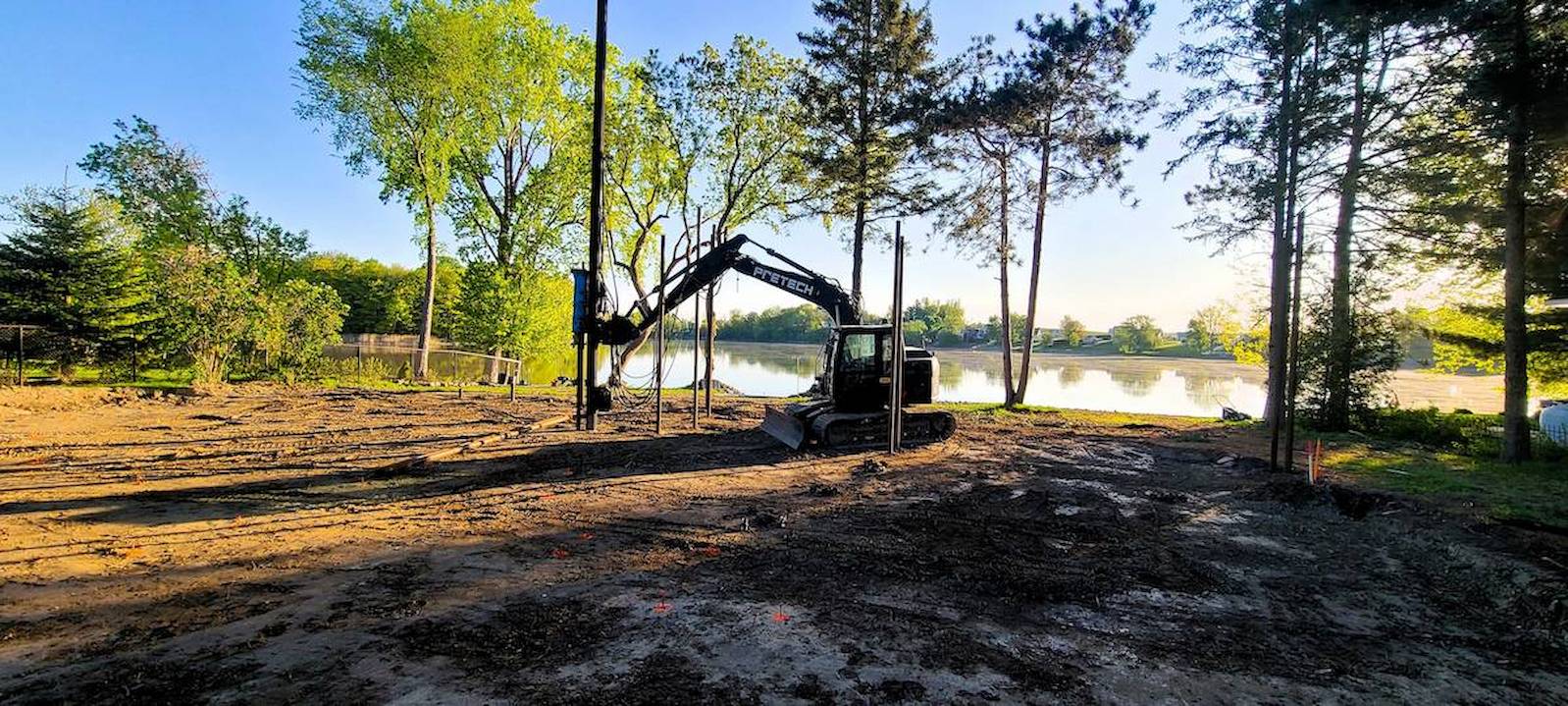
Foundation piles, as well as columns and other support systems, are an integral part of construction. Piles themselves come in a variety of sizes, materials, and installation techniques. Some are suitable for virtually any situation, while others are designed for much more specific applications. Here is a guide covering the different types of piles, their uses, and their advantages.
What are the different types of piles, and how can you tell them apart?
When researching the market, you may come across a wide variety of different piles, without ever knowing which one is truly suitable for your project and whether it will stand the test of time. Piles can be classified into different categories based on their design, material, and installation technique. However, these characteristics can be interrelated. For example, different types of piles are made of steel, but only concrete piles can be poured and cast on-site. Here is an overview of the main types of piles.
- Driven piles
Driven piles are driven into the ground. They come in various sizes and materials, but are often made of steel. All types of driven piles provide great stability, since they are driven down to stable soil or bedrock. This is why they are often used to create deep foundations for buildings and homes on unstable soil.
Driven piles can be installed using various methods: hydraulic hammers, vibrating hammers, diesel hammers, pile-driving machines, etc. Some techniques cannot be used in certain areas due to the disturbances caused by vibrations and noise. For example, diesel hammers are less expensive than hydraulic machines, but they are very noisy and produce a lot of pollution. Vibratory hammers are very effective, but cannot be used near historic buildings. It all comes down to striking a balance between construction needs and external factors.
- Helical piles
Also known as screw piles, helical piles are typically made of steel, but their lower end is helical in shape. This allows the pile to be screwed into the ground. This type of pile can be very practical because it is easy to install. Smaller ones can even be installed by hand, while larger ones require the use of machinery. However, they generally cannot be screwed deep enough into the ground due to their sensitivity to torque. This is because the pressure exerted on the leading edge of the helix can damage the integrity of the pile if too much force is applied. This means the pile may not rest on bedrock or reach sufficiently stable soil.
They could provide stability for the structure in the short term, but in the long term, if the ground shifts, the entire structure would shift as well. Therefore, it is best to reserve them for lighter projects, such as a wooden balcony or a shed. Some oversized helical piles can support heavier loads, but there is little data available to assess their durability.
- Concrete piles
When it comes to concrete piles, it is important to understand the difference between bored piles and driven piles. As mentioned earlier, driven piles can be made of concrete. In this case, they are factory-prefabricated piles that are transported to the job site. They are very strong because they are tested and manufactured in a controlled environment. However, their installation and transportation are more complex.
With concrete, the other option is to drill a hole in the ground and pour concrete into it. This would then be a bored pile. Generally, a steel framework is used to create reinforced concrete piles. This technique is often used for indoor industrial piles, where piles are poured into the ground at specific locations within an industrial building to better isolate and support heavy or vibrating machinery. Drilled piles take longer to install because the concrete needs time to cure, but they are extremely strong.
- Sheet Piles
Sheet piles are often used in excavation projects. Made of steel—though sometimes also of concrete or wood—they take the form of U- or Z-shaped profiled steel sheets. This specific shape allows the sheet piles to be joined together to form a watertight seal.
Sheet piles are rarely used on their own for foundations, but they can be part of a foundation project. This is often the case for underground projects, such as parking garages.
- Hydraulic piles
Hydraulic piles are not the same as hydraulically driven piles. The latter are driven piles installed using hydraulic machinery and are used in new construction. Hydraulic piles, on the other hand, are made of steel and are driven into the ground using hydraulic jacks. They are used to level a house that has begun to sink.
- Commercial, residential, or industrial piles
Another important factor to consider regarding pile types is their intended use: commercial, industrial, or residential. Each context has its own specific requirements.
For example, if a house is lighter than a typical commercial building, the installation may need to be quieter due to the surrounding neighborhood. Industrial buildings are often even heavier than commercial buildings, given the machinery that may be used on a daily basis. However, in an industrial neighborhood, disturbances caused by vibrations or noise are not as much of an issue as they are in a residential area.
What type of foundation is suitable for heavy structures?
Heavy structures require deep foundations, which can be constructed using two types of piles: driven piles or bored piles. In most cases, screw piles and sheet piles are not recommended for large-scale projects.
The choice between driven piles and bored piles will depend on the size of the project, the environment, the soil, local regulations, and the budget. For example, bored piles are very strong, but you have to wait for the concrete to cure. For projects that need to be completed quickly, this may not be the best option. Driven piles can pose a problem in certain vibration-sensitive areas, such as near historic buildings. However, if the piles are driven hydraulically, the disturbance is minimized.
In terms of budget, the costs of bored piles and driven piles are not necessarily very different. Bored piles require more equipment and can be more expensive, but there are many factors that are more important to consider than the price itself.
What is the difference between a sheet pile and a retaining wall?
In short, the term “retaining wall” refers to any type of structure built to hold back soil or other materials. For example, during excavation work, retaining walls must be built to prevent soil and debris from continuously collapsing. A retaining wall can be temporary or permanent.
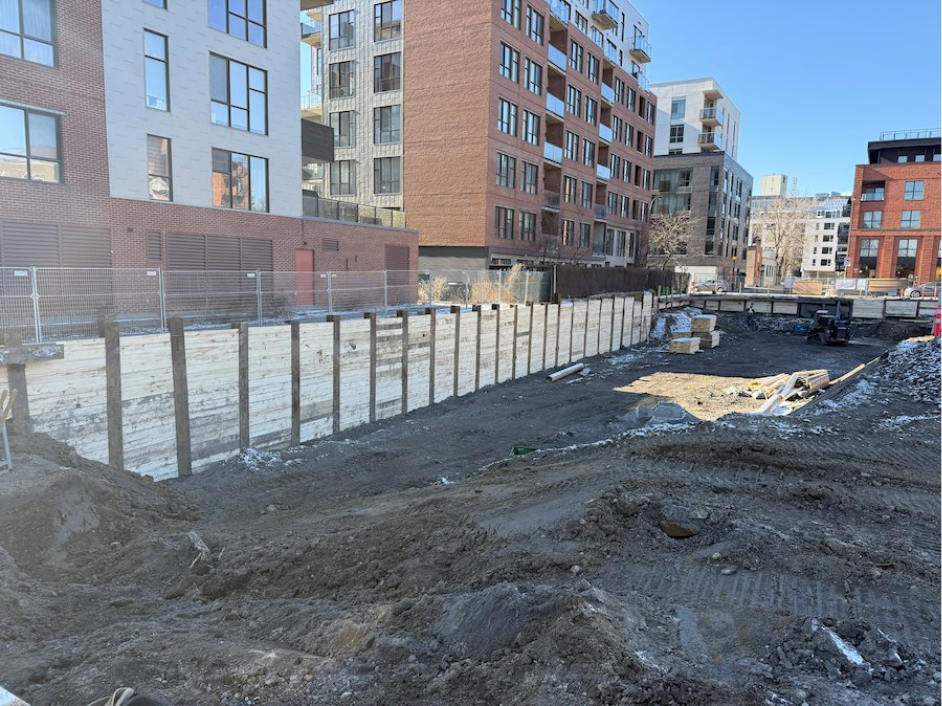
Sheet piles are flat, U- or Z-shaped piles. Because these piles can fit together very tightly, they are ideal for building a retaining wall. They can even be designed to be watertight, which means that a sheet pile retaining wall can be used in a marine environment for construction over bodies of water. Sheet piles can be used for a limited time, during construction, or as part of a permanent structure. They are often made of steel, but there are also sheet piles made of concrete and even wood.
The term “retaining wall” is therefore a broad term that can encompass many techniques, and sheet piles are one of them.
What is the difference between foundation footings and piles?
The main difference between pile foundations and footing foundations is the depth reached and its impact on the building. Footings refer to the concrete support platforms built at the base of the structure. Piles are slender columns that can be driven into the ground using specialized equipment. Piles can also be made of cast-in-place concrete. In this case, a hole is drilled into the ground to pour the concrete.
In general, with a “normal” foundation, the weight of the building is supported directly by the underlying soil. If the topsoil layers are unstable, the foundation may begin to sink, which can cause potentially serious damage.
However, there are many types of footings that can provide better support for the building and prevent settlement or other problems. Among these solutions is the use of piles.
With pile foundations, the piles support the weight of the building. Since they are driven or drilled very deep into the ground, they can rest on bedrock or stable soil. This significantly reduces the risk of subsidence or other damage to the foundation.
When comparing the cost of screw piles to that of concrete footings, concrete is generally less expensive. However, depending on the soil quality, a simple footing may not be sufficient, in which case piles must be used. Although some screw piles are large enough to support buildings, this method is generally not recommended. Driven or bored piles are more reliable.
What is the difference between screw piles and driven piles?
There are, in fact, many differences between screw piles and driven piles. The most obvious difference is their shape. A driven pile is a slender column or cylinder that can be made of steel, concrete, or wood. A screw pile has a helical shape at the end, hence its name. Screw piles, also known as helical piles, are generally made of steel.
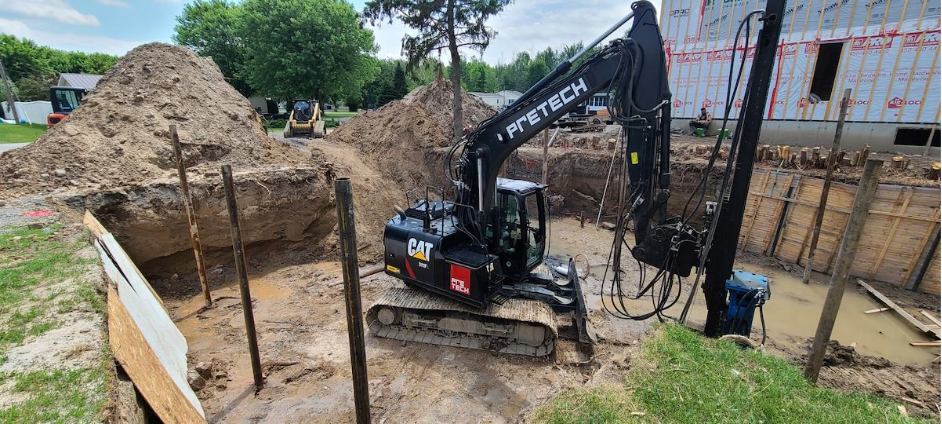
The installation process is also different. Various types of machinery can drive piles into the ground, either using a hammer, vibration, or hydraulic pressure. Screw piles are screwed into the ground, either by hand for small piles or using a machine.
The key factor to consider when comparing screw piles and driven piles is strength and reliability. Driven piles are designed to be driven into the ground until they reach stable soil or bedrock, making them highly reliable for supporting a structure over time. Screw piles are torque-sensitive due to their shape. This means that it is sometimes impossible to drive a screw pile deep enough without damaging its structure, thereby rendering it unusable.
When choosing between driven piles and screw piles, you need to consider the weight and soil conditions. In general, screw piles should only be used for lighter projects, such as a shed or a wooden deck.
Screw piles can be less expensive than driven piles and also less expensive than bored piles. If you compare the cost of screw piles to that of concrete itself, concrete may be less expensive. However, price cannot be the deciding factor when building foundations. After all, any repairs or replacements made to the foundation once it begins to settle or sink will be more expensive than doing the job right the first time.
What is the difference between a pile foundation and a column foundation?
Depending on who you ask, you might get different answers. First, there’s the issue of translating from English to French between “piers” (pillars) and “piles” (piles), as well as regional differences in the language. In Canada, piles are long, thin elements driven into the ground, whereas in the United States, they are also called pillars. Based on this logic, pillars and piles are the same thing.
However, in other cases, the term “pillars” refers to a slightly different type of structure. Piles are generally thinner than pillars, but there is no specific diameter that defines each category. The key difference between pile foundations and pillar foundations therefore lies in the depth of the foundation and the amount of weight they can support. Piles can be driven very deep, down to bedrock. Columns are normally larger, like a pillar. They can be cast in place or drilled. Since they do not go as deep as piles, they must be used for lighter loads or when the soil is stable.
When comparing pilings and bored piles to driven piles, the most important factor to consider is also depth. Pilings and bored piles involve a similar process, but bored piles provide support very similar to that of driven piles. Of course, it all depends on the soil and the building. In very stable soil, pilings may also be sufficient.
Making Informed Choices for Long-Term Stability
Understanding the different types of piles, their costs, and their advantages is an important part of planning the construction of a building. After all, although foundations are not visible, they will determine the building’s longevity, as well as the safety of the people who work or live there. It is not only very important to be familiar with the different types of piles, but also to understand the balance between soil conditions, the machinery used, and the building’s specific characteristics. All these factors will determine the best piles to use. Therefore, to get personalized advice and make the best choice, it is always recommended to consult professionals who specialize in pile foundations.

Passionate and innovative at heart


