
What Are Helical Piles? Understanding Their Uses and Weight Capacity
Helical piles, or screw piles, are ideal for light projects that require quick installation, thanks to their strength, versatility, and cost-effectiveness.
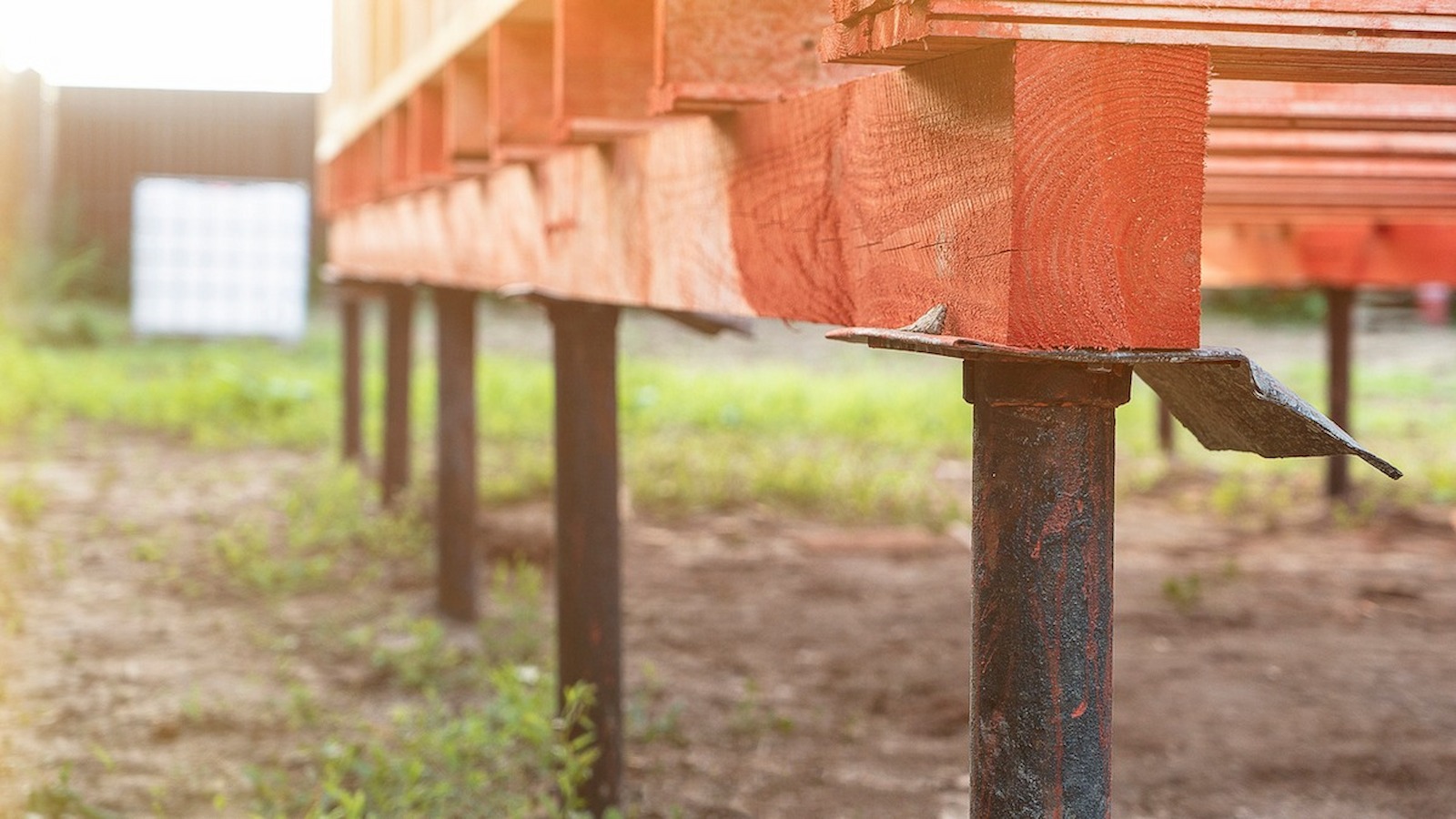
Using piles for a home’s foundation has many advantages, but you need to know which type of pile is best for your project. Not all piles are created equal, and while some thrive in certain conditions, others can lose structural integrity in others. Helical piles, also called screw piles, are easy to install and cost effective, but they shouldn’t be used for heavy projects. Here’s an overview of this versatile pile.
What Is Helical Piling?
Usually made of galvanized steel, helical piles have a helical shape at their extremity, which allows the pile to be screwed into the soil.
This pile type is quite popular for light weight projects, such as a shed or a deck, especially in unstable soil. For example, if you have a shed in an area of your land that contains clay, screw piles can ensure that the structure remains level.
They are also used for projects that require quick installation or are located near existing buildings.
While oversized screw piles can support larger loads, this is not common. In most cases, helical piles aren’t reliable for bigger projects over time.
There’s a wide range of sizes, from smaller ones that can be installed by hand, to bigger ones that require machinery.
What Are the Pros of Helical Piles?
Helical piles offer many advantages. FFirst, helical pile installation is very quick and can be done with portable equipment. Some smaller ones can even be installed by hand. There’s no need to wait for the soil to settle. Once the pile is correctly screwed, it can support weight.
They have minimal impact on the environment, since screw pile installation doesn’t cause a lot of noise or vibration. This means that the soil is barely disturbed.
Helical piles cost is reasonable. While concrete piles are typically cheaper, helical piles are still more affordable than other types, such as hydraulic piles. If you’re adding an outdoor space to your home, the cost of helical piles for a deck will likely remain well within budget.
Another strong point of helical piles is their versatility. They can be used in many soil types without problems, especially muddy soil containing a lot of water. They are also easy to remove and then reuse, so screw piles are a smart option for temporary projects.
What Are the Cons of Helical Piles?
The main drawback of helical piles is the limited data available. Since this piling technique isn’t as widely used as driven or concrete piles, there’s not much neutral and reliable information on its long-term durability in certain conditions. This means that the quality of screw piles can vary significantly between manufacturers, making it difficult to know if a specific pile has been tested for a particular soil type.
There are also some soil limitations for helical piles. The maximum grain size can exceed 60% of the pitch of the helices, making screw piles unsuitable for rocky soils or rock beds.
Torque sensitivity is another important factor to consider. If the torque limit isn’t respected, it can compromise the pile’s structural integrity. In some cases, maintaining the correct torque prevents the pile from penetrating the soil deeply enough. This is why many experts discourage using screw pile foundations for houses and larger projects, as these require deeper installation to handle higher loads — something screw piles may struggle to achieve due to torque limitations.
How Much Weight Can a Screw-Pile Support?
There’s no fixed answer for how much weight screw piles can support — it depends on factors like the pile design, manufacturer, soil conditions, and installation process. Generally, screw piles cannot support as much weight as driven piles due to their structure, and they’re often less reliable over time. Since they frequently don’t reach the refusal point, some soil movement may still occur.
However, screw piles work well for smaller projects. For example, using screw piles for decks is an affordable and straightforward solution that provides solid support without exceeding your budget.
Final Thoughts on Screw Piles
Screw piles offer an affordable and versatile foundation solution, especially for smaller projects like decks and sheds. Their quick installation and minimal environmental impact make them an attractive option. While screw pile costs are generally reasonable, they may not be the best choice for larger or heavier structures. In those cases, investing in driven or concrete piles might provide better long-term stability.
To ensure you're using the right type of pile for your project, it's best that you consult an expert. A preliminary assessment of soil conditions, load requirements, and installation techniques can help you avoid costly issues down the road.

Passionate and innovative at heart


