
Comparing Different Types of Piles: Which One Is Best for Your Project?
There are different types of piles and knowing which is best for your project requires analyzing multiple factors, such as soil, building weight, and more.
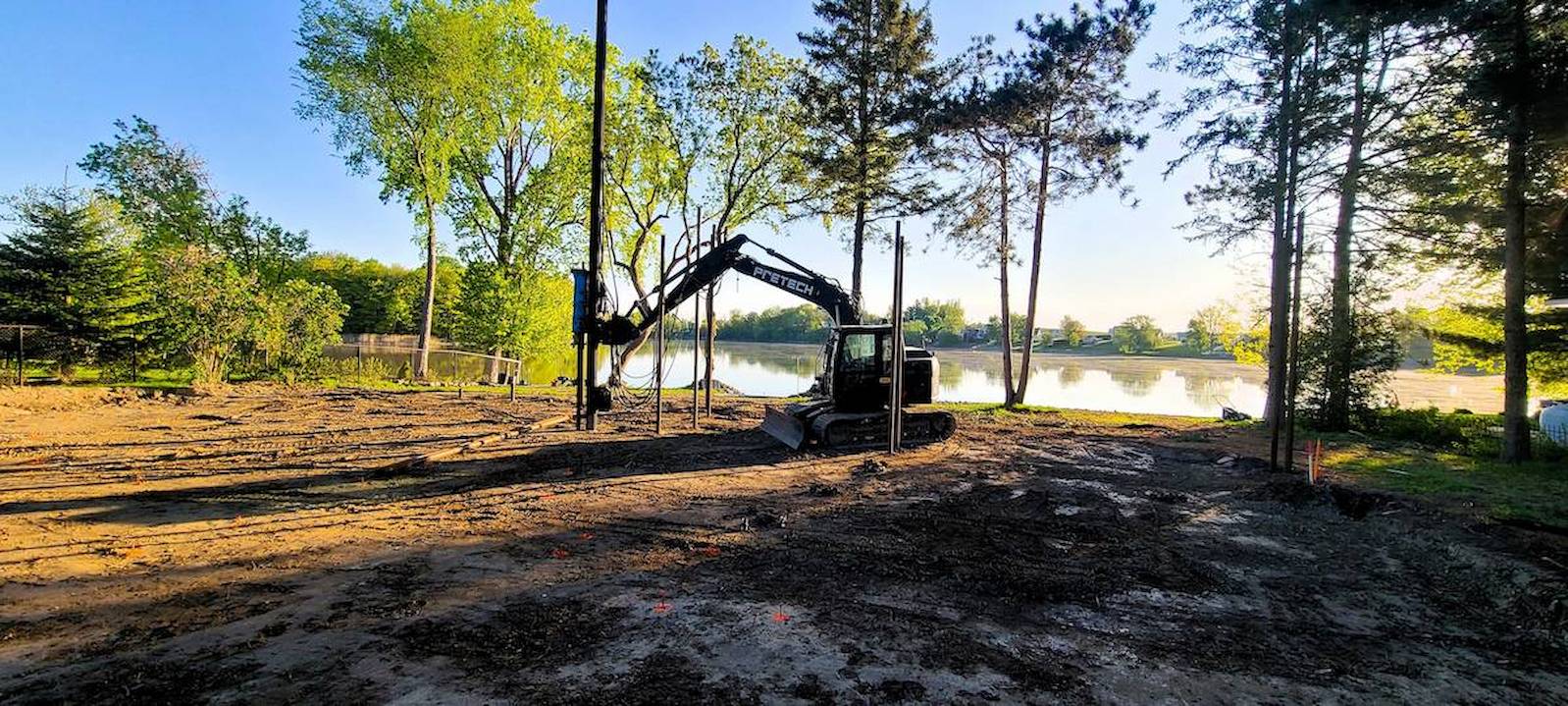
Foundation piles, as well as piers and other support systems, are an integral part of construction and design. Piles themselves come in a variety of sizes, materials, and installation techniques. Some are suitable for virtually any situation, while others have much more specific areas of specialization. Here’s a guide covering the different types of piles, their uses and their benefits.
What Are the Types of Piles, and How Do You Identify Them?
When looking at what’s on the market, you might come across a wide range of different piles and wonder which one is suited to your project and if it will last through time. Piles can be separated into different categories; their design, their material and their installation technique. However, these characteristics can be interconnected. For example, different designs of piles are made of steel, but only concrete can be poured and cast-in place. Here’s an overview of the main types of piles.
- Driven piles
Driven piles are, as the name suggests, driven into the ground. They can come in different sizes and materials, but they’re often made of steel. All types of driven piles offer great stability since they’re driven down to stable soil or rock beds. This is why they are often used to create deep foundations for buildings and homes on unstable soil.
Driven piles can be installed using different methods: hydraulic hammers, vibratory hammers, diesel hammers, piling rigs, etc. Some techniques can’t be used in certain areas because of the nuisance caused by vibration and noise. For example, diesel hammers are cheaper than hydraulic machinery, but they cause a lot of noise and significant pollution. Vibratory hammers are very efficient but can’t be used close to historic buildings. It’s all a matter of balancing the needs of the construction with the external factors.
- Helical piles
Also known as screw piles, helical piles are typically made of steel, but their lower end is helical in shape. This allows the pile to be screwed into the ground. This type of pile can be very practical because it is easy to install. Smaller ones can even be installed by hand, while larger ones require the use of machinery. However, they generally cannot be screwed deep enough into the ground due to their torque sensitivity. Basically, the pressure caused on the helix leading edge can damage the integrity of the pile if it’s over-forced. This means that the pile might not be resting on bedrock or have reached stable enough soil.
They could bring stability for construction in the short term, but not in the long term If the soil moves, so would the whole structure. They are better reserved for lighter projects, such as a wooden balcony or a shed. Some oversized helical piles can support heavier loads, but there’s little data to assess their longevity.
- Concrete piles
When it comes to concrete piles, it's important to understand the difference between driven and bored piles, especially since both methods are used depending on soil conditions and project needs. You’ll also often see this referred to as drilled piles vs. driven piles, though the terminology may vary. Driven concrete piles are typically precast — made in a controlled environment and transported to the construction site. These offer excellent strength and quality control but require more complex handling and installation.
Bored piles, on the other hand, are cast directly on-site. A hole is drilled into the ground, and concrete is poured in, often around a reinforcing steel cage. This method is often used for indoor industrial piles, providing strong and stable support for heavy or vibrating equipment. While bored piles require more time due to curing, they offer exceptional durability.
- Sheet Piles
Sheet piles are often used in excavation projects. Made of steel, but also sometimes of concrete or timber, these are sheets shaped in a U or Z profile. This particular shape allows the sheet piles to be locked together in a manner that can be watertight.
Sheet piles are rarely used for foundations on their own, but they can be part of a foundation design. This often happens with underground projects, such as parking garages.
- Hydraulic piles
Hydraulic piles are not the same as hydraulically driven piles. The latter are driven piles installed using hydraulic machinery and are used in new construction. Hydraulic piles, on the other hand, are made of steel and are pushed into the ground using hydraulic jacks. They are used to level a house that has settled or begun to sink.
- Commercial, residential, or industrial piles
Another important thing to consider with the types of piles is their use: commercial, industrial or residential. Each context comes with different needs.
For example, if a house is lighter than a typical commercial building, the installation may need to be quieter due to the surrounding neighborhood. Industrial buildings are often even heavier than commercial buildings, considering the machinery that could be used daily. However, in an industrial neighbourhood, nuisance caused by vibration or noise isn’t as problematic as in a residential area.
Which Type of Foundation Is Suitable for Heavy Structures?
Heavy structures require deep foundations, and this can be achieved with two different types of piles: driven piles or bored piles. Most of the time, screw piles and sheet piles aren’t recommended for bigger projects.
The choice between driven piles and bored piles will depend on the size of the project, the environment, the soil, local regulations, and the budget. For example, bored piles are very strong, but you have to wait for the concrete to cure. For projects that need to be completed quickly, this may not be the best option. Driven piles can pose a problem in certain vibration-sensitive areas, such as near historic buildings. However, if the piles are driven hydraulically, the disturbance is minimized.
In terms of budget, bored pile vs. driven pile costs aren’t necessarily very different. Bored piles require more equipment and can be more expensive, but many factors are more important to consider than the price.
What Is the Difference Between a Sheet Pile and a Retaining Wall?
To put it simply, the term “retaining wall” concerns any type of structure created to hold back soil or other material. For example, when doing excavation work, retaining walls have to be created to avoid having soil and debris continuously falling back. A retaining wall can be temporary or permanent.
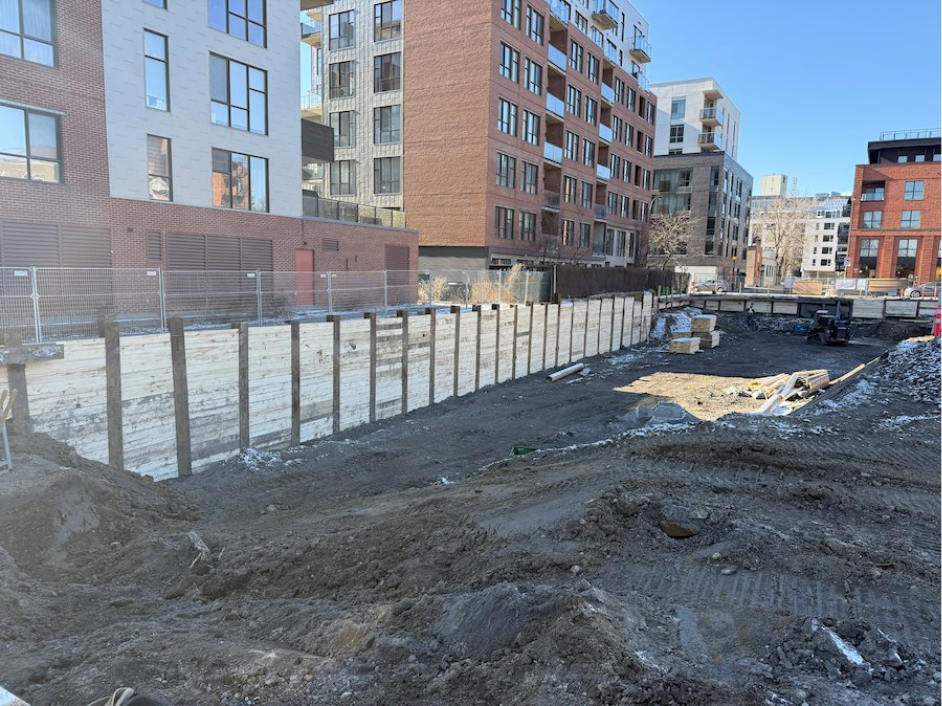
Sheet piling is a type of pile that is flat and shaped in either a U or a Z shape. As these piles can interlock very tightly, they are perfect for building a retaining wall. Their design can even be watertight, meaning a sheet pile retaining wall can be used in a marine environment for construction near bodies of water. Sheet piles can be used for a limited time, during construction, or be part of a permanent structure. They are often made of steel, but there are also sheet piles made of concrete and even timber.
Retaining walls is a global term that can cover many techniques, and sheet piling is one of them.
What Is the Difference Between Foundation Footings and Piles?
The main difference between pile foundation vs. footing is the depth reached and its impact on the building. Footing refers to the concrete support platforms built at the base of the structure. Piles are slender columns that can be driven into the ground using specialized equipment. The piles can also be made of poured concrete. In this case, a hole is drilled into the ground for concrete to be poured.
Basically, with “normal” footing, the building’s weight is supported directly by the soil under it. If the first layers of soil aren’t stable, the foundations can start to sink, causing potentially serious damage.
However, there are many types of footing possible to better support the building and avoid sinking or other problems. Among these solutions is the use of piles.
With pile foundations, the piles support the weight of the building. Since they are driven or drilled very deep into the ground, they can rest on bedrock or stable soil. The risk of sinking or other foundation damage is then greatly reduced.
When comparing helical pier costs vs. concrete footings, concrete will usually be cheaper. However, depending on the soil quality, simple footing might not be sufficient, and piles should be used. Even though some screw piles are big enough for buildings, it’s usually not a recommended method. Driven piles or bored piles are more reliable.
What Is the Difference Between Screw Piles and Driven Piles?
There are, in fact, many differences between screw piles and driven piles. The most obvious difference is the shape. A driven pile is a slender column or cylinder that can be made of steel, concrete or timber. A screw pile has a helical shape at the end, hence the name. Screw piles, also called helical piles, are usually made of steel.
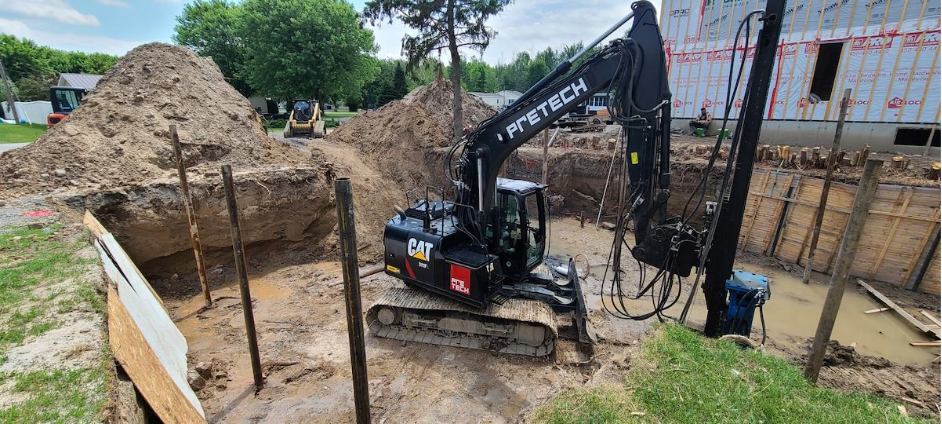
The installation process is also different. Different types of machinery can install driven piles into the ground, by either a hammer, through vibration, or using hydraulic pressure. Screw piles are screwed into the soil, either by hand for small piles, or with a machine.
The biggest factor between screw pile vs. driven pile that must be considered is solidity and reliability. Driven piles are made to be pushed into the ground until they reach stable soil or rock bed, which is what makes them so reliable to support a structure over time. Screw piles are sensitive to torque because of their shape. This means that it’s sometimes impossible to screw a pile deep enough without damaging its structure, rendering it useless.
When choosing between driven piles vs. screw piles, weight and soil quality need to be assessed. Generally speaking, screw piles should be only used for lighter projects, like a shed or a wooden balcony.
Screw piles can be less expensive than driven piles and bored piles. When comparing the cost of screw piles vs. concrete, concrete can be cheaper. However, price cannot be the deciding factor when building foundations. After all, any repair or replacement done on the foundation once it starts to settle or sink, will be more expensive than any work done from the start.
What Is the Difference Between Pile and Pier Foundation?
Depending on whom you ask, you might receive different answers to this question. First, it’s worth noting that there are regional differences in the language. In Canada, piles are long and slender elements driven into the ground, while these can also be called piers in the United States. By that logic, piers and piles are the same thing.
However, in other instances, piers designate a slightly different type of construction. Piles are usually more slender than piers, but there’s no specific diameter that defines each category. The essential difference between piers vs. pile foundations is the depth of the foundation and the amount of weight they can carry. Piles can be driven very deeply, down to bedrock. Piers are normally larger, like a column. They can be constructed in place or drilled. As they don’t go as deep as piles, they should be used for smaller loads or when the soil is stable.
When comparing piers and drilled shafts vs. piles, the biggest factor to consider is also the depth. Piers and drilled shafts have a similar process, but drilled shafts provide support very similar to that of driven piles. Of course, this all depends on the soil and the building. In very stable soil, piers can also be enough.
Making Informed Choices for Long-Term Stability
Understanding the different types of piles, their costs, and their benefits is an important part of planning the construction of a building. After all, the foundations aren't visible, but they will determine the building’s longevity, as well as the security of the people who work or live there. Beyond knowing the different types of piles, it’s also crucial to understand the balance between the soil conditions, the machinery used, and the building’s specifics. All these factors will determine the best piles to use. All these factors will determine the best piles to use. For tailored guidance, it's always recommended to consult professionals who specialize in pile foundations.

Passionate and innovative at heart


