
Why Interior Industrial Piles Are Essential for Heavy Machinery Support
Machine foundations are essential for heavy machinery and interior industrial piles provide cost-effective support and stability.
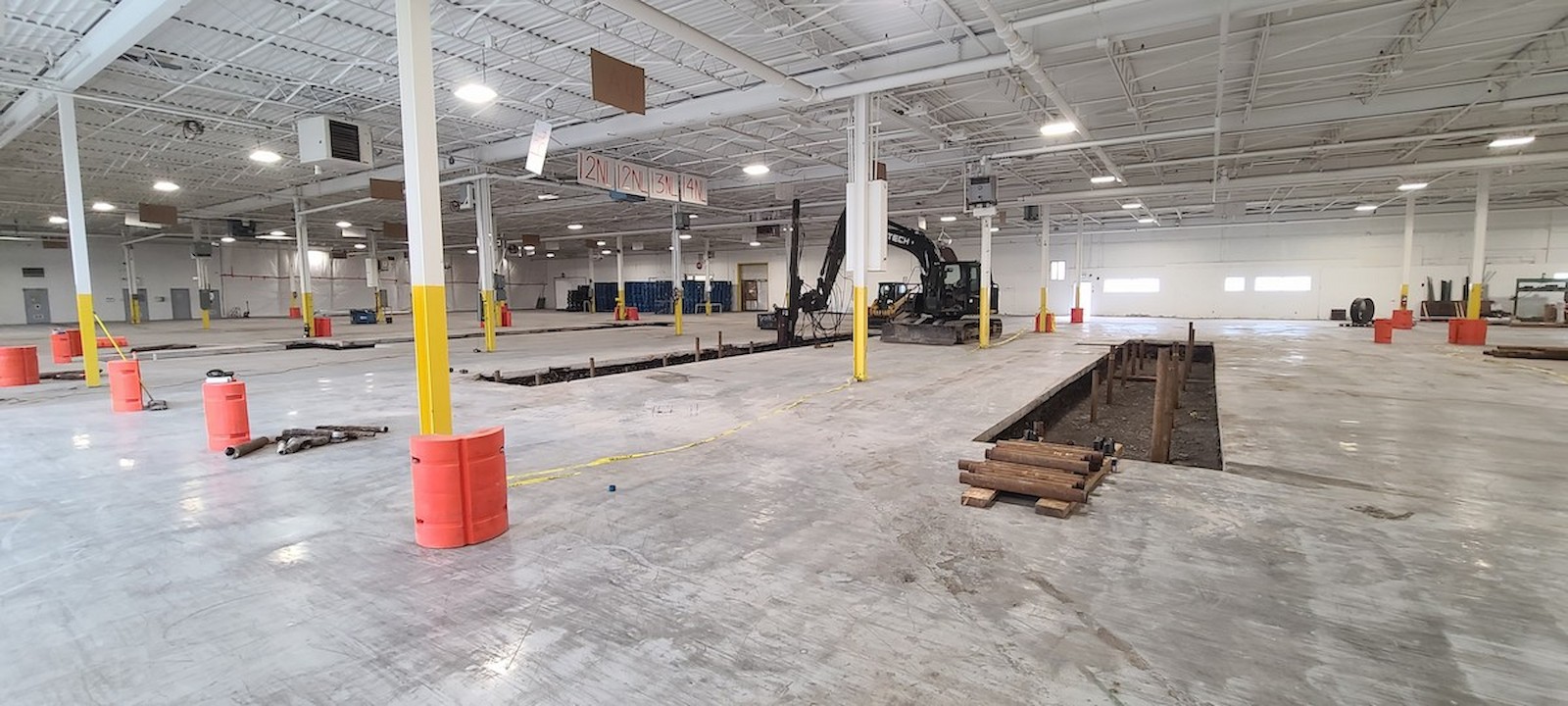
There are many types of piles, some of which are highly effective for ensuring durable and solid foundations, even in clay or other unstable soil. In the industrial sector, interior industrial piles provide reliable support for machine foundations. Here’s an overview of this specialized pile application.
What Are Interior Industrial Piles?
Interior piling refers to the installation of piles inside an existing building without the need for excavation. Different types of piles can be used, including screw piles, driven piles and bored piles. Driven piles are particularly effective, especially when installed with a hydraulic machine. This technique provides superior strength and stability. Interior piles are often necessary when ground conditions are challenging or when access to the exterior of the building is limited.
In the industrial sector, interior piles are often used to add extra support for heavy equipment as a machine foundation technique. Normally, driven piles will be used to reinforce the structure in a specific location of a building where heavy or vibrating equipment will be placed. This protects both the building and the equipment.
Why Is a Machine Foundation Necessary?
Machine foundations are necessary in an industrial environment for many reasons. Even though most industrial buildings are extremely solid, extra foundations for specific machinery will enhance the building’s integrity and will help the machinery operate more efficiently and last longer.
Machine foundations provide essential support and stability. For machines that require precision, this can make a significant difference. When properly aligned, the machine can better withstand its weight and absorb the forces generated during operation, helping to prevent damage over time.
Since the foundation design for vibrating machines is specifically created to absorb vibrations, it helps prevent them from being transmitted to the structure. If vibrations reach the structure, they can pose a risk to its integrity and create discomfort for people inside the building. A well-designed foundation can also reduce noise from the machine, making the work environment more comfortable for workers.
Since machine foundations protect the building, prevent damage to the machine, and improve working conditions, they enhance productivity and reduce overall costs.
Why Use Industrial Piles for Machine Foundations?
There are different types of machine foundations, and interior industrial piles are an effective way to stabilize heavy equipment indoors, especially for CNC machines and other heavy structures.
Using industrial piles offers several advantages. Designed to support both heavy vertical and lateral loads, they can handle extremely heavy machinery with ease.
Piles also have the unique ability to create “islands” for each machine. Since each machine rests on its own slab supported by piles, it’s isolated from vibrations caused by other machines. This allows for greater precision and reduces the need for extra maintenance caused by external vibrations.
Industrial driven piles are also surprisingly cost-effective compared to other machine foundation designs. Installation is fast and efficient, which helps reduce both labour costs and downtime. Additionally, this type of pile is highly durable, so you won’t need to redo the work anytime soon.
How Are Interior Industrial Piles Installed?
Interior industrial piles for equipment support can be installed using different techniques. At Pretech, we use hydraulic machinery, which allows us to work quickly and efficiently with minimal disturbance.
The process starts with an engineering plan to ensure that every factor is properly assessed. We go beyond simply estimating depth and the number of piles — the soil conditions and load requirements are carefully evaluated to guarantee long-term stability.
Once the plan is complete, we move the necessary equipment inside the building to begin the work. Existing concrete slabs are removed where needed, and the piles are driven into the ground using a hydraulic hammer. Concrete is then injected into the pile to consolidate the surrounding soil and ensure a stable foundation for the equipment.
Please note that there may be a size requirement for this type of work. For example, when using a hydraulic hammer to drive the piles, the building’s garage door should be at least 10 feet by 10 feet and the ceiling should be at least 20 feet high.
Using indoor piles for supporting heavy machines is often necessary in industrial complexes. They provide greater saftey and comfort for workers while improving machine performance and reducing maintenance costs. However, this type of work requires careful planning and execution. To ensure the installation meets the specific needs of your facility and to guarantee long-term stability, it's essential that your project is assessed by professionals.

Passionate and innovative at heart


