
The Role of Hydraulically Driven Piles: From Strength to Precision
Hydraulically driven piles are a cost-effective way to ensure stable foundations in unstable soil. Here's everything you need to know about them.
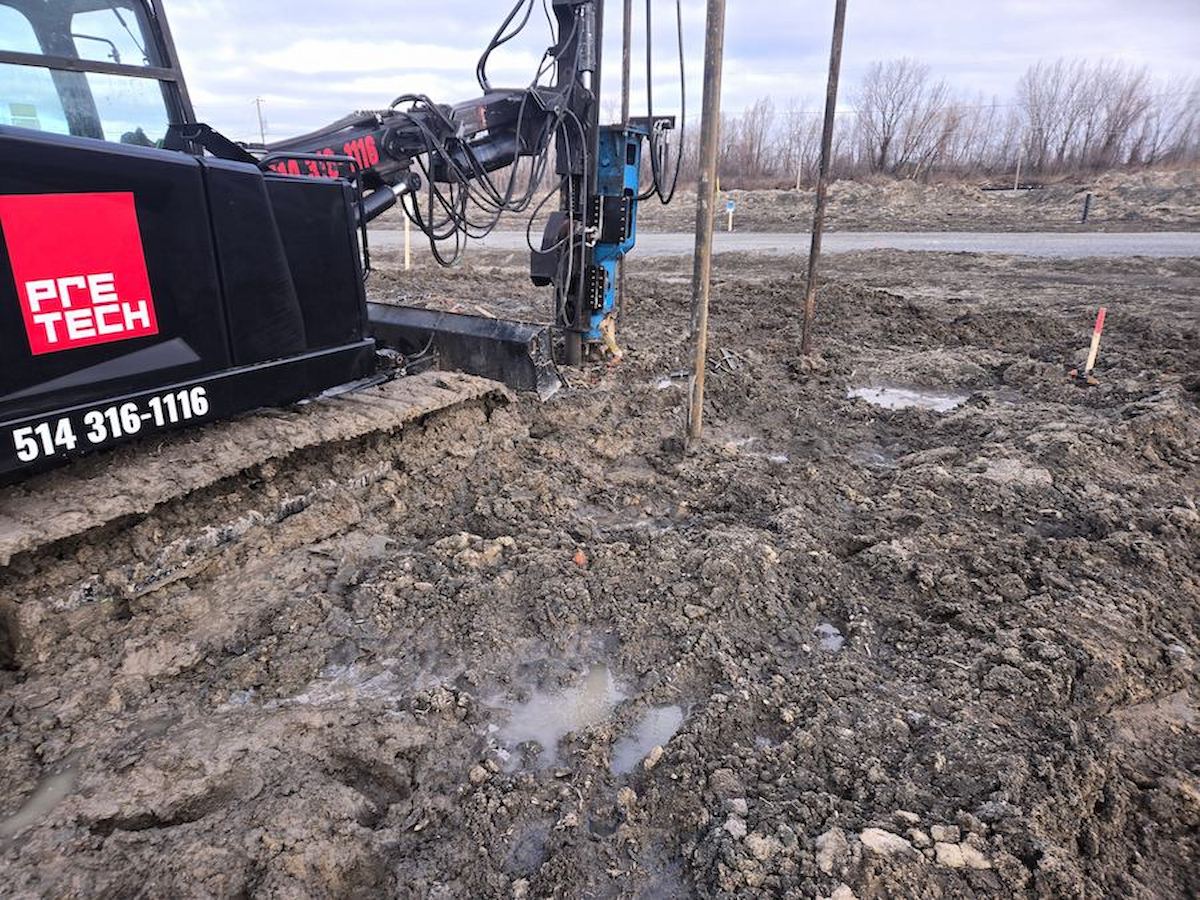
Pile foundations offer many advantages, but it is important to determine the type of pile best suited to your project. Hydraulically driven piles are increasingly popular in new construction because they provide an effective and cost-efficient way to ensure long-term stability, even in clay or sandy soil. Here are the key elements to know about these piles when they should be used.
What Is a Driven Pile?
This type of pile is generally used before construction, as it is an effective technique to prevent any movement, especially in unstable soil. Driven pile installation procedure requires heavy equipment, as the piles will be driven into the ground until they reach the point of refusal. Once all piles are at this point, pile heads are placed. The structure will then be built on the piles, instead of resting on the ground.
For areas where the soil is unstable, due to clay, for example, this technique is becoming a standard as it prevents future complications.
There are different types of driven piles. Often made of steel, piles can also be made of timber or precast concrete. The project load and the soil type will define which material is more adequate.
There are different techniques for driving piles. At Pretech, we use a hydraulic system that creates barely any vibration and is quicker compared with other techniques, such as vibrating hammers, diesel hammers, piling rigs, etc.
What Are the Benefits and Disadvantages of Driven Piles?
The driven pile method is interesting and sometimes necessary. However, it’s not always the right technique for the job. Here are some advantages and disadvantages of driven piles.
Benefits
- Among the different deep foundation options, using driven pile is usually economical.
- They maintain their shape, even in soft soil.
- They can support heavy loads in both axial compression and tension.
- When the piles are driven using hydraulic methods, there’s no vibration. This makes the installation ideal when there are historical buildings in the area, and much more agreeable for neighbours.
- Driven piles don’t create waste or debris, and they don’t require any toxic or dangerous substances. This makes them an environment-friendly option.
- Since the structure doesn't rest directly on the soil, driven piles reduce humidity within the building and the problems that can result from it.
- Earthquakes aren't a major problem in Quebec, but it is worth noting that driven piles are very effective in preventing damage caused by this type of natural phenomenon.
Disadvantages
- When driven piles are installed using systems other than hydraulic ones, this can cause significant vibrations, which can be problematic for surrounding buildings.
- Since the piles are driven deep into the soil, it can be impossible to assess their state. Piles can be damaged during installation or can be damaged by time on older properties. For new buildings, testing might be necessary if damage is suspected.
- Piles can corrode if not properly protected, or if the wrong material was used for the project.
When To Use Driven Piles?
The decision on which type of pile or foundation you need should always be made by an expert. However, as a general guideline, driven piles are most commonly used in unstable soils, such as clay, sandy, or granular soils.
As they are both time and cost effective, projects with such limitations will often use driven piles instead of other options.
Driven pile construction is a safe option on steep land, or when there’s a risk of landslides. It can also be used during projects as a technique to retain soil during excavation or construction.
How Much Can Driven Piles Cost?
The final cost of driven piles depends on the size of the project, the number of piles required, the material chosen, their length and the soil conditions. For example, a large building on dense soil that requires many deep steel piles will be much more expensive than a regular house on concrete driven piles. Projects that look similar on the outside, like two buildings of the same size, could have a different driven pile cost because of the soil itself. Every project is unique in terms of costs.
Driven piles are a cost-effective and durable technique to create deep foundations in unstable soil. It’s one of the best ways to prevent foundation sagging and avoid long-term expensive repairs. Thanks to our hydraulic system, the installation of these piles won’t create vibration, like other techniques do, and will be more time effective as well. To carefully assess your project’s needs, always trust the experts.

Passionate and innovative at heart


