
Hydraulic Piling for Straightening Structures: From Leaning to Level
Hydraulic piles are an effective way to level a building that sank, while hydraulic piling is a versatile technique to drive piles.
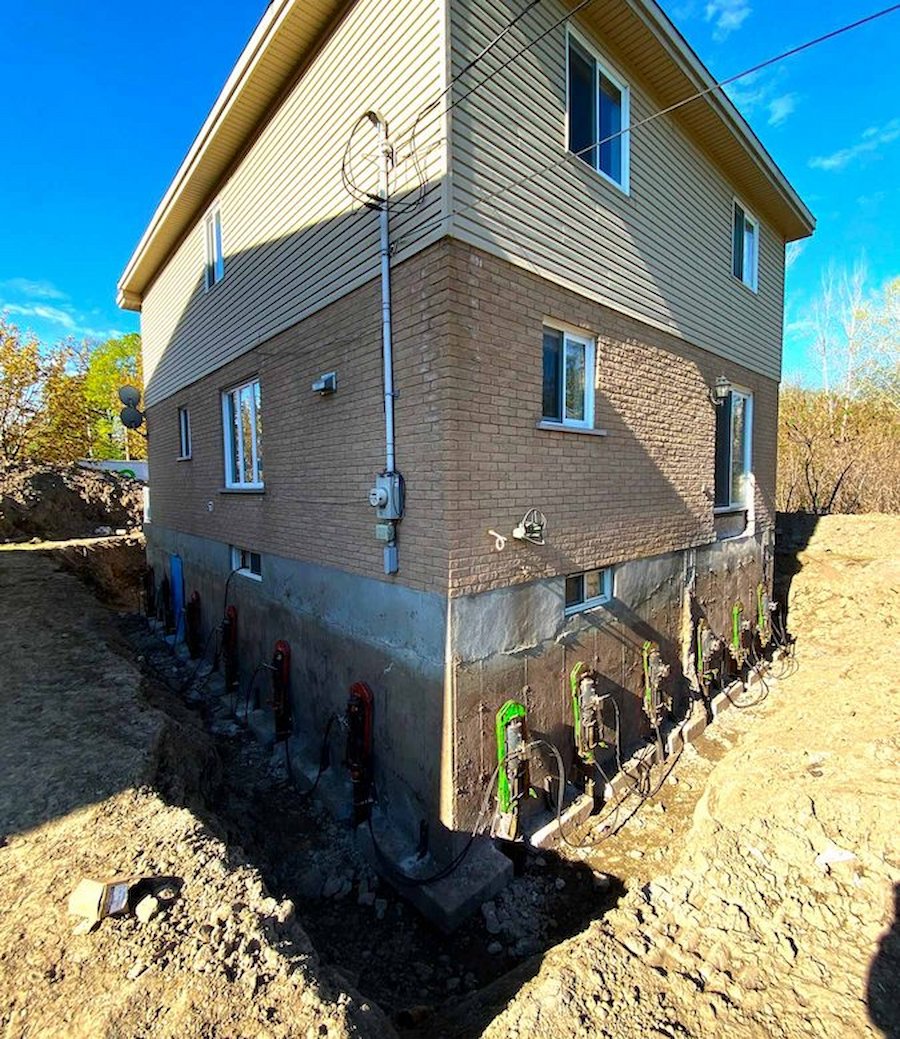
While pile foundations have many uses and advantages, determining which type of pile is best suited for your project requires the help of an expert. When it comes to straightening structures, hydraulic piles are a true lifesaver. As a technique, hydraulic piling offers significant advantages. Here’s an overview of both hydraulic piles for sinking houses, as well as hydraulic pile driver machines as a technique.
What is Hydraulic Piling?
Hydraulic piling refers to a specific technique to drive piles into the ground, using a hydraulic pile driver. Many other machines exist for that function, such as diesel hammers, air/steam impact hammers and vibratory hammers. Of course, not every machine is suitable for all projects or conditions.
Generally speaking, the principal advantage of a hydraulic pile hammer is how silent it can be. As this machine works by applying hydraulic pressure on a pile to drive it into the ground, it also causes very little vibration, especially compared to a vibratory hammer or a regular diesel hammer. This allows piling projects to be done in residential areas, or close to historical buildings without creating damage.
This type of pile driver machine can be used with different types of piles, such as concrete, steel, H, or composite piles. The technology is also quite quick while being very precise and consistent. It’s perfect for projects that require finesse. Hydraulic drivers are often used for driven piles, which create stable foundations for projects on unstable soil.
When To Use Hydraulic Piles?
Hydraulic piles are a specific type of pile used to level a building that has begun to collapse. In fact, this type of pile can lift a building back to its original level. First, the piles are pushed into the ground with hydraulic jacks, using the weight of the house to drive them until they reach bedrock or load-bearing soil. The house level can then be adjusted by lifting it to where it originally sat.
Most buildings can be levelled using hydraulic piles, whether it is a house or a commercial building.
Usually made of steel or concrete, hydraulic piles are an ideal solution to straighten a structure that has already sunk. Foundations that only require stabilization can rely on other techniques, but this would need to be assessed by a professional. Any cases of soil sinking or collapse must be evaluated by an engineer.
This type of pile does not require a hydraulic impact pile hammer, so the procedure doesn’t create excessive noise or vibration.
What Are Pressed Piles?
Pressed piles are similar to hydraulic piles and are also installed using a hydraulic jack. However, they aren’t made to level up a house. Rather, they are used to reinforce and stabilize a foundation. Once installed, they can transfer the house load to more stable soil layers.
If a house is at risk of sinking but hasn’t significantly settled yet, pressed piles might be the best solution. The choice between pressed piles and hydraulic piles must be evaluated by a professional, as every situation is unique.
What Are the Costs For Hydraulic Piles and Piling?
If your house needs to be levelled, hydraulic piles offer an effective solution, but the final cost depends on these conditions.
Whether we are addressing the cost of hydraulic piles or the technique of a hydraulic silent pile driver, pricing varies depending on the project. Several factors come into play, including the number of piles required, the depth they need to reach, and the type of soil.
Hydraulic silent pile drivers are particularly useful in sensitive environments, such as residential neighborhoods or areas with historical buildings, where excessive noise and ground disturbance must be avoided. Unlike vibratory hammers or diesel impact hammers, this technique applies steady hydraulic pressure, making it a quieter and more controlled process.
While the cost of different pile driving machines can vary, the method used for a given project is typically determined by soil conditions and structural requirements rather than pricing alone. In some cases, hydraulic piling is essential to ensure both stability and minimal environmental disruption.
Hydraulic Piling: The Smart Solution for Levelling and Stability
Hydraulic piling is a reliable and efficient method for foundation stabilization and structural repair, offering precision, durability, and minimal disruption. Whether used to level a sinking building or drive piles into challenging soil, it provides a stable, long-lasting solution. With the added benefit of hydraulic silent pile drivers reducing noise and vibration, this technique is ideal for residential and sensitive environments. However, every project is unique, soa professional assessment is essential to determine the best approach.

Passionate and innovative at heart


