
Piling Work for House Stability: When It's Required and What to Expect
Piling work for a house is often required for new homes built on weak or unstable soil. Learn when it’s needed and which type of piles to choose.
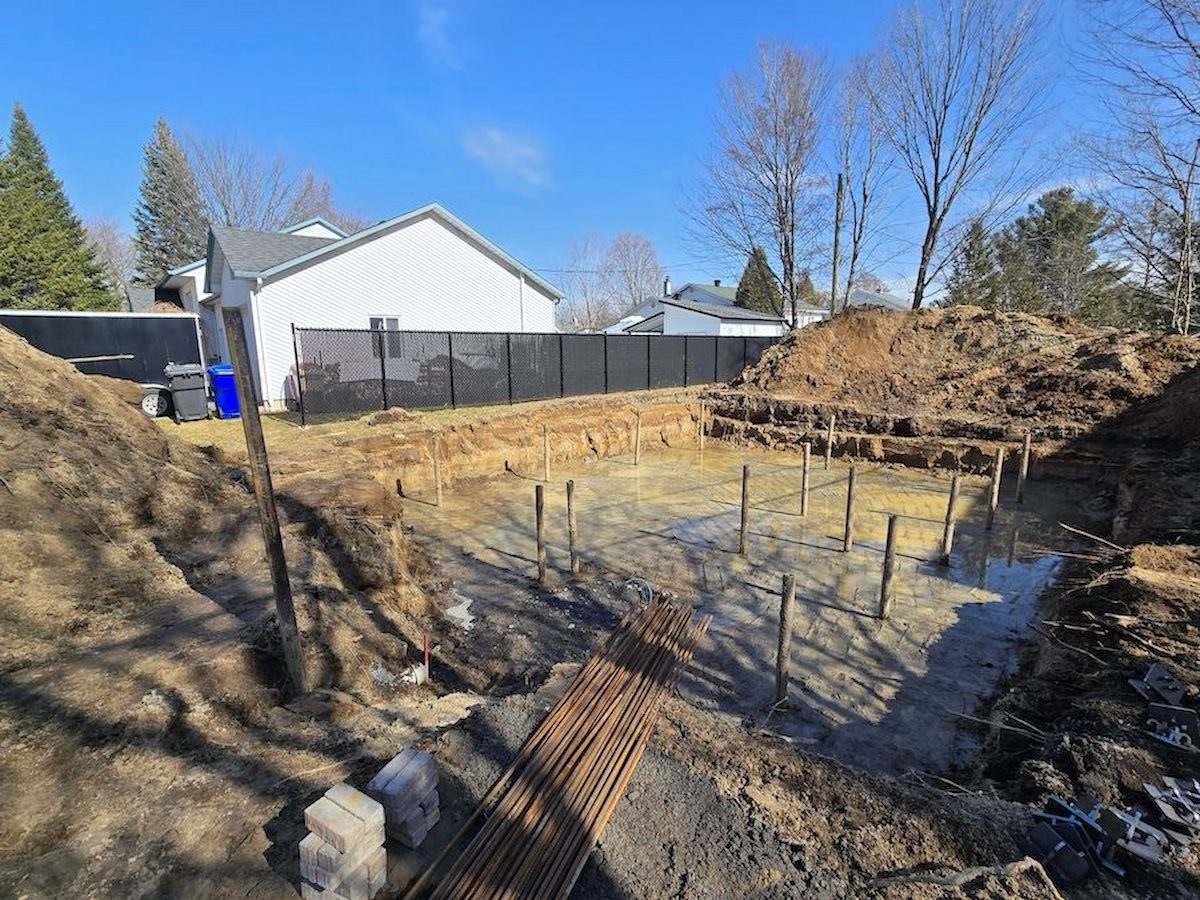
When building a new house, choosing pile foundations is an excellent way to avoid future problems and enjoy the many benefits of this technique. There are different types of piles in construction, and it’s important to know which one is best for your project, your needs, and the location. You should take the time to assess if piles are required and what to expect.
What Is Piling Work For a House?
Piling work for a house means that piles will be used to support the foundation of a house. Normally, a house foundation is supported by the ground under it. However, when the superficial layers of soil are unstable or weak, the weight of the house can cause it to sink, leading to problems, such as cracks in the foundations, sinking, water infiltration, etc.
When using what is called pile foundation in construction, piles are driven deeply into the ground until they reach bed rock or stable soil. Then, the house rests on the piles and, by default, on a solid and stable base, instead of the first layers of soil.
Piles can be used to reinforce the foundation after its construction, or to level a house that already sank slightly. However, it’s always better to install piles before construction. In a way, piles can be seen as a type of site preparation for building construction.
Different types of piles can be used, depending on whether it’s a new construction or not, and if there are other buildings nearby. Some techniques that create more noise and vibration are easier to use in brand new neighbourhoods, while others are more silent and perfect for restricted areas. The type of soil and the depth to which the piles need to be driven are also factors to consider.
What Piles Can Be Used for New Houses?
On new houses, you can virtually use any type of construction pile. The choice will be decided based on the size of the house and the type of soil. Existing houses, especially in densely packed neighbourhoods, leave fewer options. Hydraulic piles are often the best option in this scenario.
Driven piles, often made of steel, are extremely efficient. They can be driven down to bed rock and, when using a hydraulic machine, nuisance caused by noise and vibration are reduced to a minimum. Precast concrete piles can also be driven into the ground, but they are less flexible.
There are cast-on-site concrete piles, where the ground will be drilled and then concrete poured into a cast. It’s an effective option, but more common in an industrial context to reinforce specific parts of a building.
Another option is screw piles, but data on this type of pile is scarce, so long term results aren’t guaranteed. Since screw piles have a torque limit, there’s the possibility that they wouldn’t be screwed deep enough into the soil to support enough weight. For lighter projects, such as wood balconies or to support a shed, they are quite practical and easy to install.
How to Decide the Need for a Pile Foundation for a Building
There is no context in which pile foundation is a bad idea in itself. However, it’s not always necessary. In some contexts, if the soil is pure rock, it won’t be possible to push piles anyways. Basically, pile foundations are suitable for any unstable soil: clay, sand, highly organic soil, waterlogged soil, etc.
The soil is the primary factor in determining whether you need pile foundations for a new home. This must be assessed by a geotechnical engineer who determines what type of foundation is needed.
The local jurisdiction is important to consider. Since whole areas of Quebec have clay soil, some municipalities require any new construction to be done on piles.
Seismic activity can also be a factor. In Quebec, this isn’t much of a concern, but even small earthquakes can impact foundations. Pile foundations help alleviate that, especially when done with a steel pile, which allows a certain movement of the structure, to avoid pressure and tension.
How Much Does It Cost to Pile a House?
The cost of piling a house varies greatly from one project to another, even if the construction is similar. The soil and the depth down to which piles need to be driven are important factors. The deeper they need to go, the longer the work takes, and the more expensive it can be. The size of the house and its weight impact the number of piles needed, which in turn impacts the price.
Generally speaking, piled foundations are more expensive than concrete ones, simply because there’s more work to do. However, building on pile foundations is always cheaper than having to repair or redo foundations completely.
Construction piles for foundations can seem like an unnecessary and costly step when building a new house, but it’s actually the opposite! Pile foundations are the best way to have a stable house that won’t move, no matter how weak the superficial layers of soil are. Remember that preventing foundation damage is always cheaper and more time efficient than repairing it. For the best results, it’s important to consult with experienced foundation specialists, who can assess soil conditions and recommend the right piling solution.

Passionate and innovative at heart


