
Pile Foundation for House Projects: The Benefits of Building on Solid Ground
A pile foundation for house construction ensures lasting stability, helping you avoid costly repairs and extra work caused by foundation movement.

Pile foundations have many uses and benefits, but people may wonder why we use pile foundations instead of traditional ones. There are clear advantages to using piling, such as solidity and durability. However, many other benefits depend on the type of piles and the technique used. Here’s an overview of what you can expect from each pile type and how they can all help build stronger foundations.
What Are the Benefits of a Piled Foundation?
The benefits of pile foundations for a house are evident, especially when it comes to avoiding sinking and settling. There are many other reasons to choose piling for your foundations..
- Protection Against Sinking Foundations
The strongest argument in favour of piled foundation is its capacity to avoid foundation sinking. As the piles transfer the building’s weight to stable soil or bedrock, the foundations barely move. This avoids all sorts of problems from cracks in the walls, water infiltration, doors and windows not functioning properly, etc. Sinking foundations can even lead to the total collapse of a house so it’s a problem that needs to be taken seriously. When using pile foundations for houses from the beginning, all these issues are avoided.
- Compliance with Codes in Some Regions
In some municipalities, especially within the Greater Montreal area, it’s required for any new construction to use pile foundations. This occurs in areas where the soil is unstable, usually with high clay content. There’s even financial support for construction in these cases.
- Protection Against Seismic Activity
Even though Quebec isn't known for its earthquakes, they can still occur and damage a home's foundation. They can also cause significant changes in the ground. Piles allow for additional flexibility and movement, which means that when the ground shakes, the house can move slightly with it, rather than resisting the movement and risking structural damage from the pressure.
- Avoiding Moisture Problems
When the water table is very high, using piles helps keep the foundation above the water. This, in turn, helps avoid water infiltration and mould problems caused by high humidity levels.
- Longevity
Quality piles last many decades, even centuries. Installing piles for foundation work isn’t something that requires maintenance. Once it’s done, it will last.
- Flexibility
There are many types of piles and piling techniques, which allows flexibility for different projects. From hydraulically driven steel piles to bored piles, you’ll find different materials, shapes and equipment. It’s important to mention that the benefits of piling will change depending on the type of pile. For example, bored piles, made of concrete poured into a drilled hole, are very solid and don’t cause much vibration, but they require more time to install and cure. On the other hand, driven piles installed with a diesel machine are quick and efficient but cause significant vibrations. Hydraulic machinery can be used instead, but it might require more space.
- Improved Machinery Performance
In industrial settings, piles can be used to reinforce a specific part of a building where heavy machinery is used. Not only is the building protected, but the machines work better and often require less maintenance. It also helps reduce vibration and noise, which creates improved working conditions for employees.
Why Is a Pile Foundation Preferred?
Pile foundations are often preferred for houses for the simple reason that preventing damage is always better than having to repair it later. Foundation problems are quite common in Quebec because of the soil type in many regions, and pile foundations help avoid these problems. In some cases, entire neighborhoods are built on driven piles.
Even in soil that isn’t weak, our climate of hot summers and very cold winters can cause changes in the soil, rendering it unstable. The same goes for water: when snow melts, the soil can become waterlogged and affect foundations. Piled foundations are the safest option for building on weak soil or soil that could potentially change.
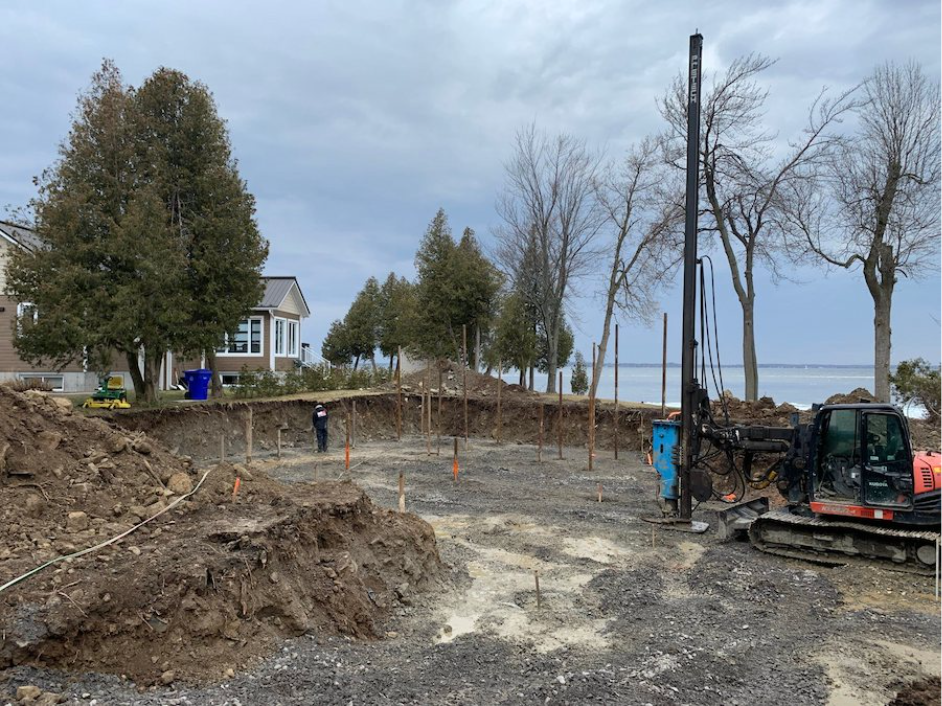
You might wonder, “What is traditional piling?” The most conventional way to pile is to use driven piles. Long, slender steel piles are driven into the ground using heavy machinery. Hydraulically driven piles have a serious advantage as their installation doesn’t create much vibration or noise. Concrete piles can be driven, or they can be cast in place after a hole has been drilled. For lighter projects, such as a shed, helical piles, also called screw piles, can be used. It is possible to put a new house addition on screw piles.
Some pile manufacturers offer generous warranties, adding an extra piece of mind to homeowners.
What Are the Effects of Piling?
There are many advantages of pile foundations, but piling itself can have a negative impact, especially if the method isn’t well chosen or if certain factors aren’t correctly calculated and analyzed.
The biggest effect of piling comes from the vibration. Vibrations can create discomfort for neighbours and for natural fauna. They can also affect the soil and create more weakness. Vibrations can affect the structure of the surrounding buildings, especially historical ones. The noise caused by the piling can be significant and create stress for both human beings and animals.
Some piling methods don’t create much noise and vibration, like hydraulic piling. Bored pile installation can also be relatively quiet. However, it’s important to understand that drilling or screwing into the soil will have an impact. It can cause water contamination, as well as disturbance of the ecosystem. Some techniques carry an important carbon footprint.
Any pile foundation design and any new construction will have an impact on the surroundings. However, there are ways to minimize this. Correct assessment of the soil, water table and surrounding environment is key. Site preparation for house construction can help, as well as strictly following water protection measures. Also, there’s the possibility of using corrective methods and rehabilitating techniques for ecosystems that were disrupted.
Can Vibrations Damage a House?
Sometimes, the piling construction process can cause serious vibrations, which can unfortunately damage houses and other buildings. Vibration damage to houses can also happen in areas with heavy traffic and blasting. Piling isn’t the only cause of such damage.
The type of damage depends on the fragility of the building itself, its foundations, and the soil under it. The proximity of the vibration source and the duration, frequency and magnitude are also important factors. An older building on unstable soil and close to a piling operation is more vulnerable to damage than a new house built on solid ground.
Vibrations can cause direct damage, resulting in cracks and visible issues like flaking stucco or falling plaster. Vibration can also cause the soil to settle more than it would have naturally. In this instance, the vibrations didn’t cause damage per se, but by affecting the soil, foundational and structural issues can occur.
It’s important to note that, while the risk of damage caused by vibrations is real, it shouldn’t be a reason to avoid pile foundations altogether. We often recommend hydraulic machinery to drive piles, as it reduces vibrations and avoids problems for surrounding buildings. If you are worried about vibration, you can mention your specific concern to the expert you choose to work with. They’ll be able to correctly assess what is needed and find solutions.
Where is Piling Required?
The construction of pile foundations is required in certain municipalities where the soil is very unstable, usually due to its high clay content. You’ll see this primarily in the areas surrounding Greater Montreal.
Even when not required, pile foundations are a good idea wherever the soil is unstable. This can include clay and sandy soils, as well as soils with a high organic content. Areas with a high water table and waterlogged soils can also pose significant problems for a home’s foundation.
Since soil instability can be caused by extreme temperature changes, heavy rain and other environmental factors common in the province of Quebec, piling should be considered for most new buildings.
Other examples of situations where piles are needed include larger structures, such as skyscrapers and bridges. In industrial settings, piles are also used under heavy machinery.
When building a house, a piled foundation might be suggested as an option, without being an obligation. In such cases, it’s crucial to evaluate the long-term risk.
What Is the Average Cost of Piling?
There are several factors to consider when it comes to the costs of pile foundations. It's practically impossible to give a general price, since each project is unique.
Piling costs change according to the types of piles, the depth to which they need to be driven, the number of piles, the type of soil, the weight of the building, etc. All of these play a role. Two houses could look similar in appearance but have very different prices in terms of house piling cost simply because of the soil. Generally, the deeper the piles must go into the ground, the more time it takes, and the more expensive it will be. Logically, requiring a higher number of piles will also cost more.
Some piles are less expensive than others. Concrete piles can be cheaper, but take more time and labour, so their cost can be equivalent to that of driven piles. Screw pile costs can be lower, but they won’t have the same weight support capacities. It all depends on the project.
Your location can also have an impact: in a more populous area, with more companies offering piling services, you could get more competitive prices. However, the cost of operating in a big city is often more expensive, so it might not be as clear-cut. If you want to install pile foundations for a remote house, there could be extra costs related to transport.
One thing is sure, no matter what the price is for choosing a pile foundation at the time of construction, it will always be cheaper and less stressful than having to repair a foundation later.
What Are the Risks of Not Piling a House?
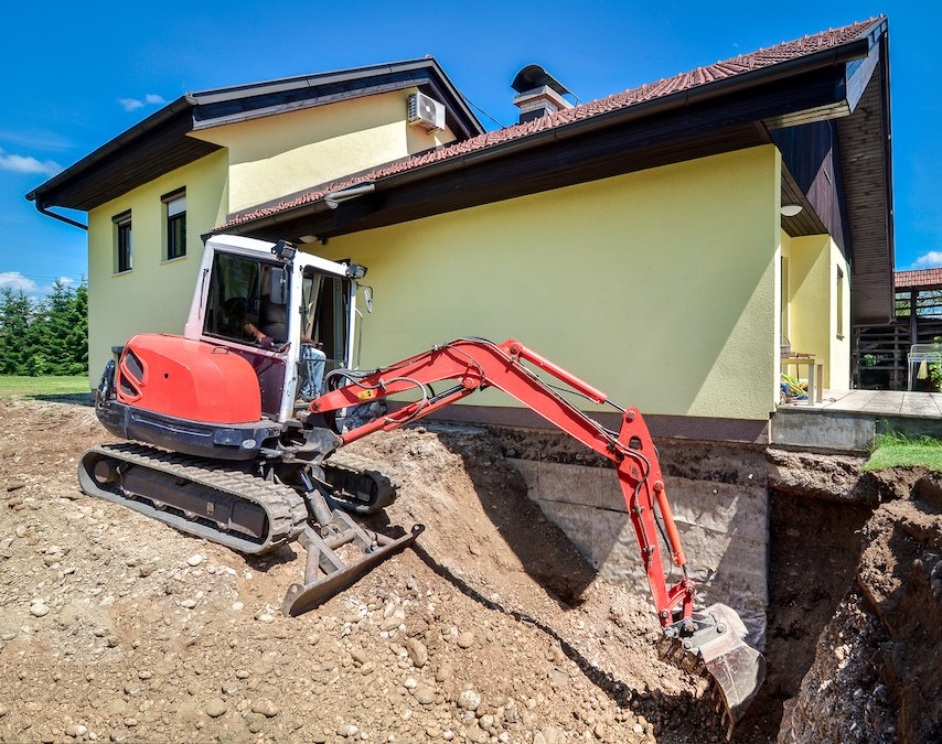
Not all houses require a pile foundation. In some cases, such as on rocky soil, it’s practically impossible. However, there are some cases when it’s mandatory. Even when it’s only a recommendation, building a house on piles is often the smartest option.
The main risk of not piling a house is foundation damage. When the house doesn’t have piles, the foundation rests directly on the ground. The weight is then distributed to the first layers of soil. On stable soil, this doesn’t cause problems. However, soils like clay or highly organic soil move a lot. They expand and contract depending on the water content and the weather.
This can cause the house foundation to tilt unevenly and start sinking. This, in turn, causes pressure on the structure and the foundation. In the beginning, the problem might be superficial, such as cracks in the plaster or windows and doors that stick. However, as the damage becomes more extensive, a house could become uninhabitable. In some cases, demolition is the only option. When a foundation crack occurs, water infiltration can be a serious problem, causing direct damage, but also a health hazard due to mould.
Solid Foundations Start with Smart Choices
Pile foundations offer a reliable solution for ensuring the long-term stability of residential buildings, especially in areas with weak or unstable soil. From protecting against sinking and structural damage to withstanding seismic activity and high water tables, the advantages of pile foundation construction are numerous. While piling may not be required in every case, skipping it in the wrong conditions can lead to costly repairs or even foundation failure.
With so many types of piles and installation methods available, the right solution depends on your project's location, soil type, and structure. That’s why it’s essential to consult with experienced foundation professionals who can evaluate your site and recommend the best approach. Investing in a solid foundation from the start is the best way to build smarter — and protect your home for the future.

Passionate and innovative at heart


